The Ghost Town I Live In
About a year ago, I gave myself a project to research the land I live on; born out of curiosity, it was supposed to be a simple weekend endeavor. But as I clicked through the deeds of past ownership, I uncovered a history that I had no idea existed – a close-knit community, thriving industries and a dark chapter in Florida’s history – I realized I lived in a ghost town. The clues were peppered in the myriad documents that I uncovered hinting at what past lives existed here and what ghosts were (and are still) around; the essence of something that once was, an imprint, though literal ghosts aren’t out of the question, I just haven’t seen any. As I began to sift through and distill the information, many narratives began to take shape – the communal, the familial, the industrial, the environmental – and collectively these stories created the essence of the once town of Higley, Florida. It’s hard to envision now when you walk down Em En El Grove Road that any such community existed and since so few vestiges are visible, you must walk with the same vision of the founders, letting their ghosts guide you, seeing through their eyes the imprint of the past; the Higley House Hotel, the post office, the school, the church, the shops and the homes. The information and conclusions presented hereinafter is based on extant documentation including deeds, records from the Board of County Commissioners, the Bureau of Land Management, the Department of the Post Office, newspaper articles, census records and genealogies.
Beginning of a Town
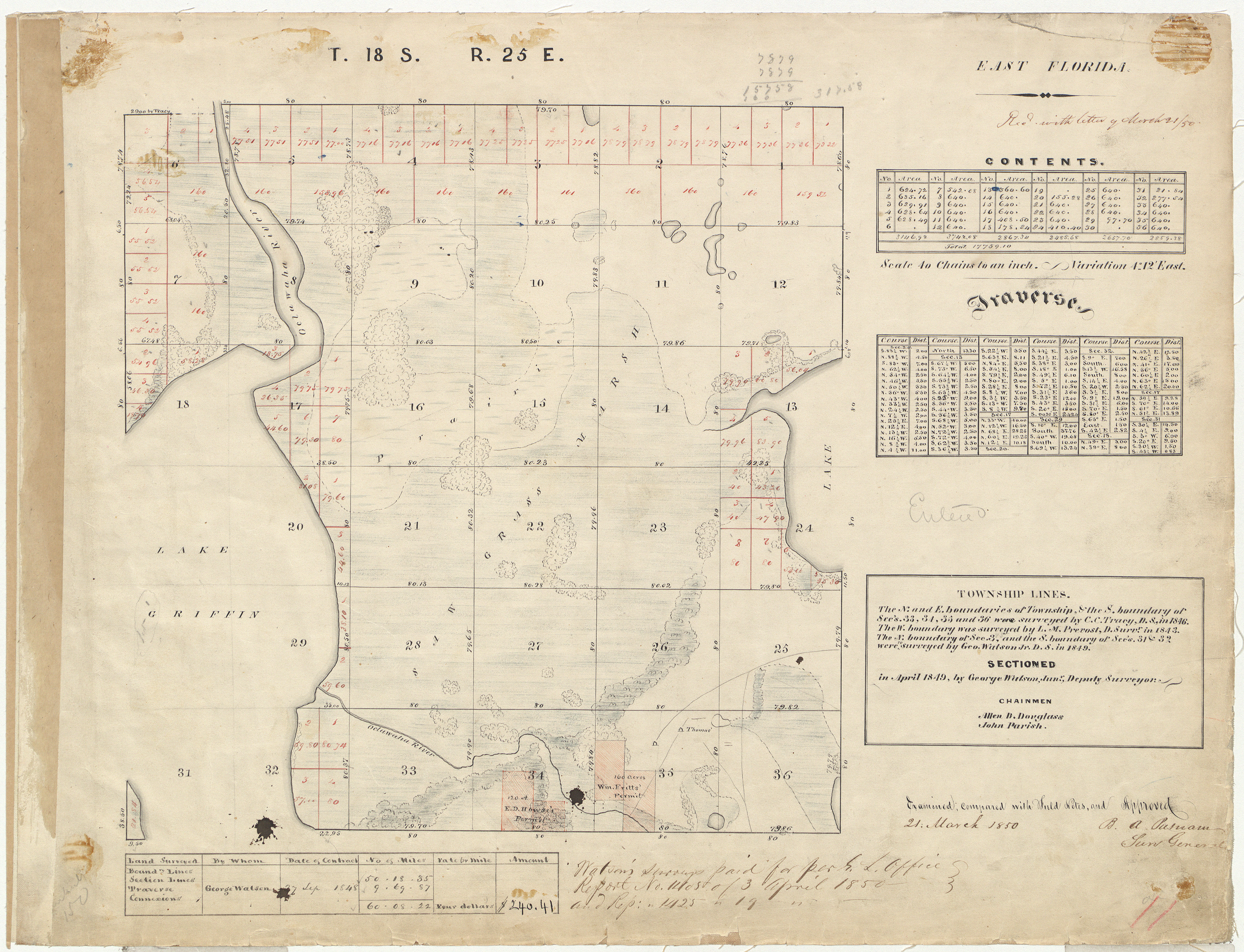
In 1883, Edward Emery Higley, his mother Hannah Higley and her sister Maria Emery of Cedar Rapids, Iowa, purchased land that would become part of the town of Higley. Edward seems to have been a serious investor in the development of what would, in 1887, become Lake County as he’s found on deeds with other players of the period who were responsible for the forgotten towns Ravenswood and Kismet.
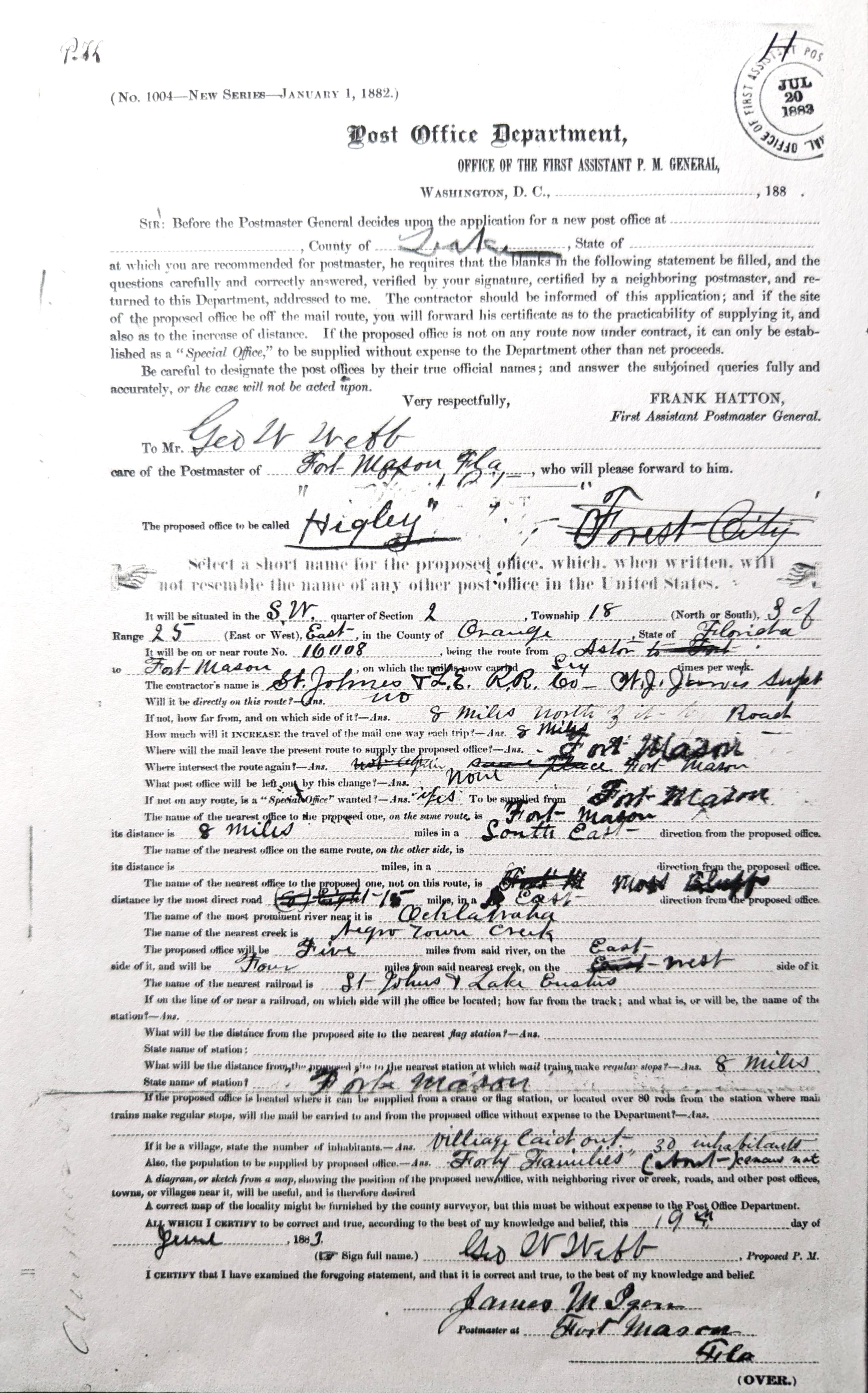
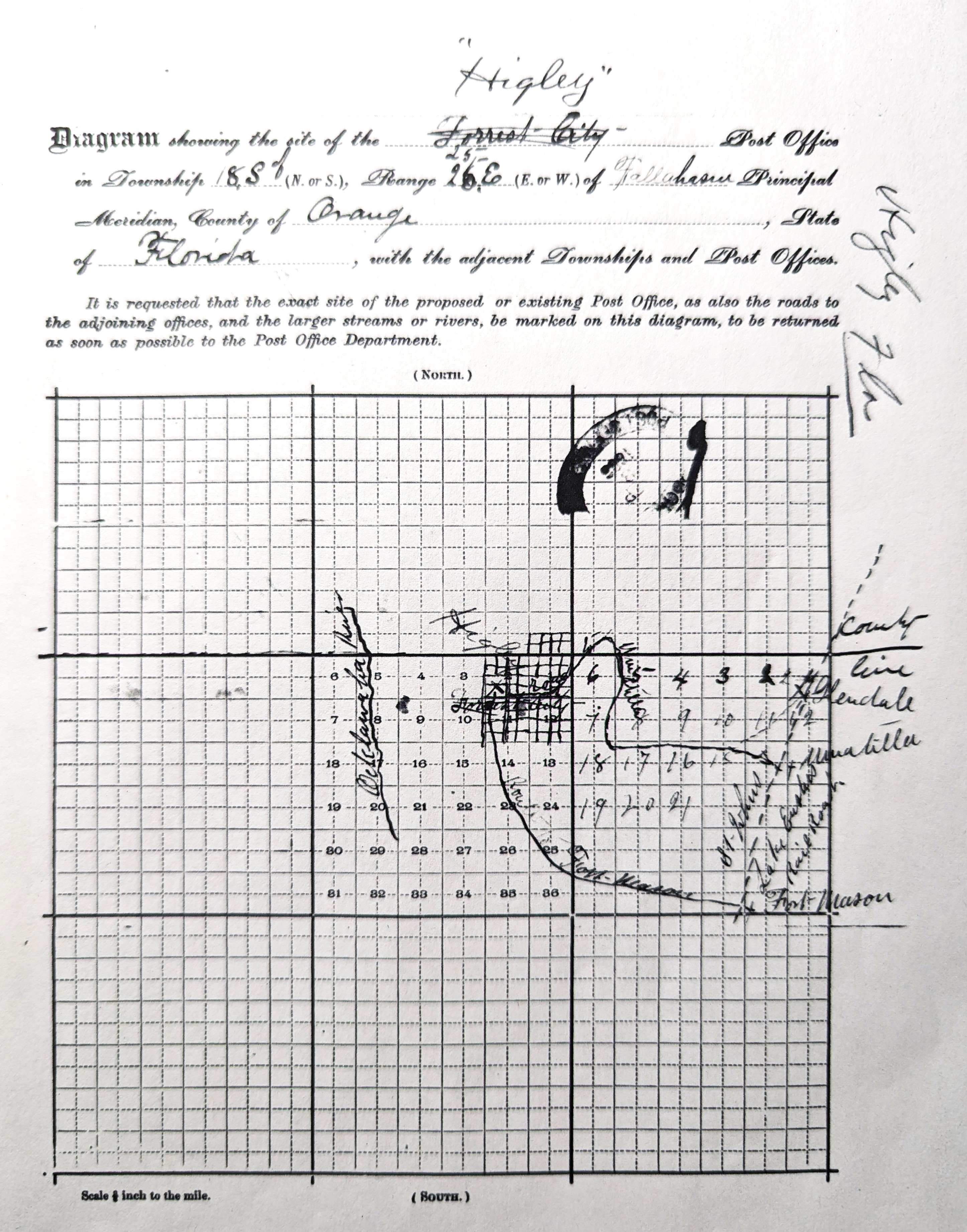
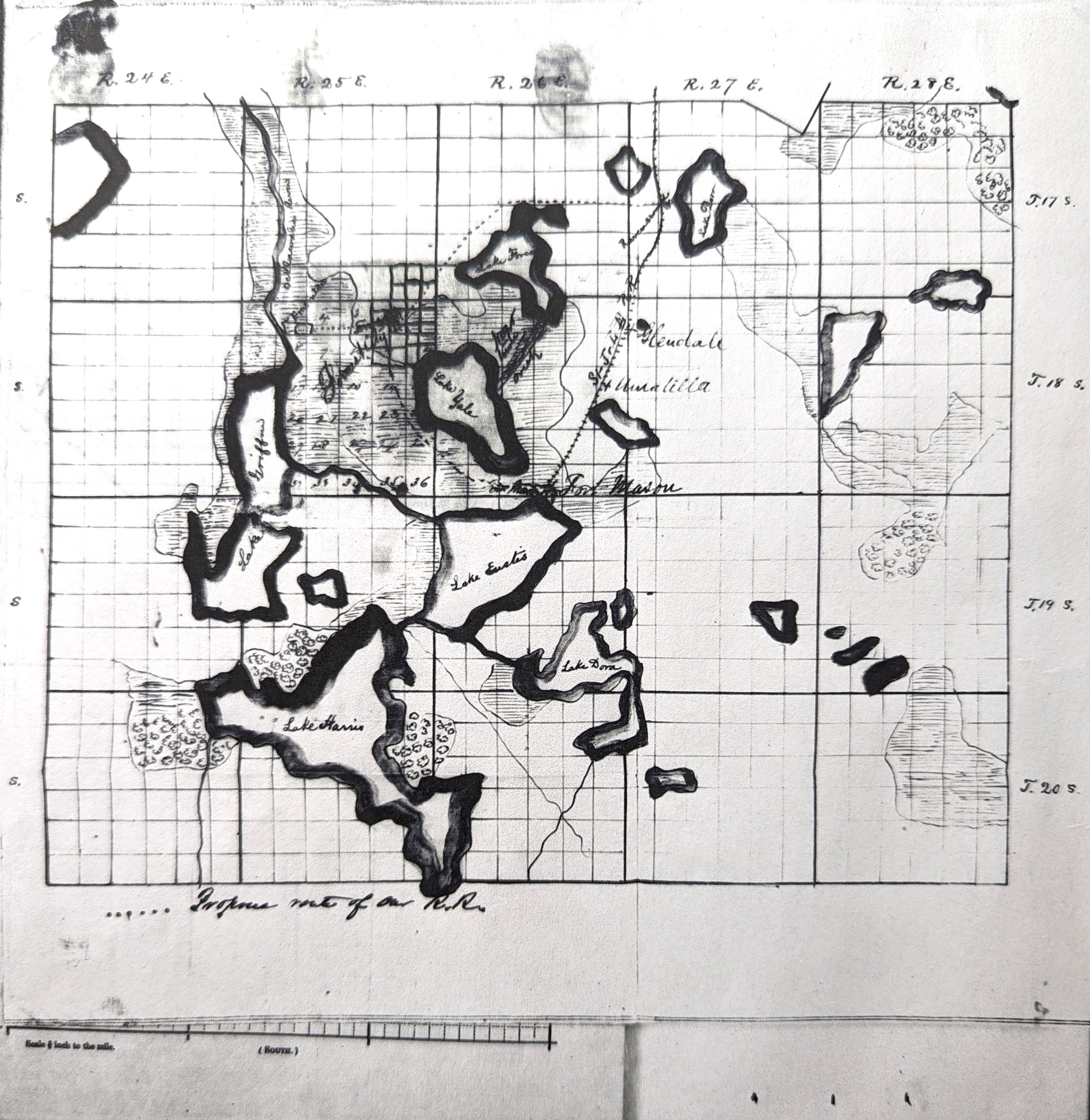
The idea for the town of Higley may have been conceptualized for some time but it’s first official appearance that I’ve found dates to 3 June 1883 in a series of documents from the Department of the Post Office. Here you can see that the original name of the town was to be Forrest City; however, that name was already taken. George Webb, friend and business partner of Edward, was named as the first postmaster of the Higley post office and author of the document. The original plat of the town has since been lost – neither Orange County, Lake County nor Marion County have a copy so all we have are these drawings done by George and, presumably, Edward and through these we get a glimpse of the dream which included the “propose[d] route of our R[ail] R[oad].” Also listed is “Negro Town Creek”, another intriguing clue to the areas past that warrants further research.
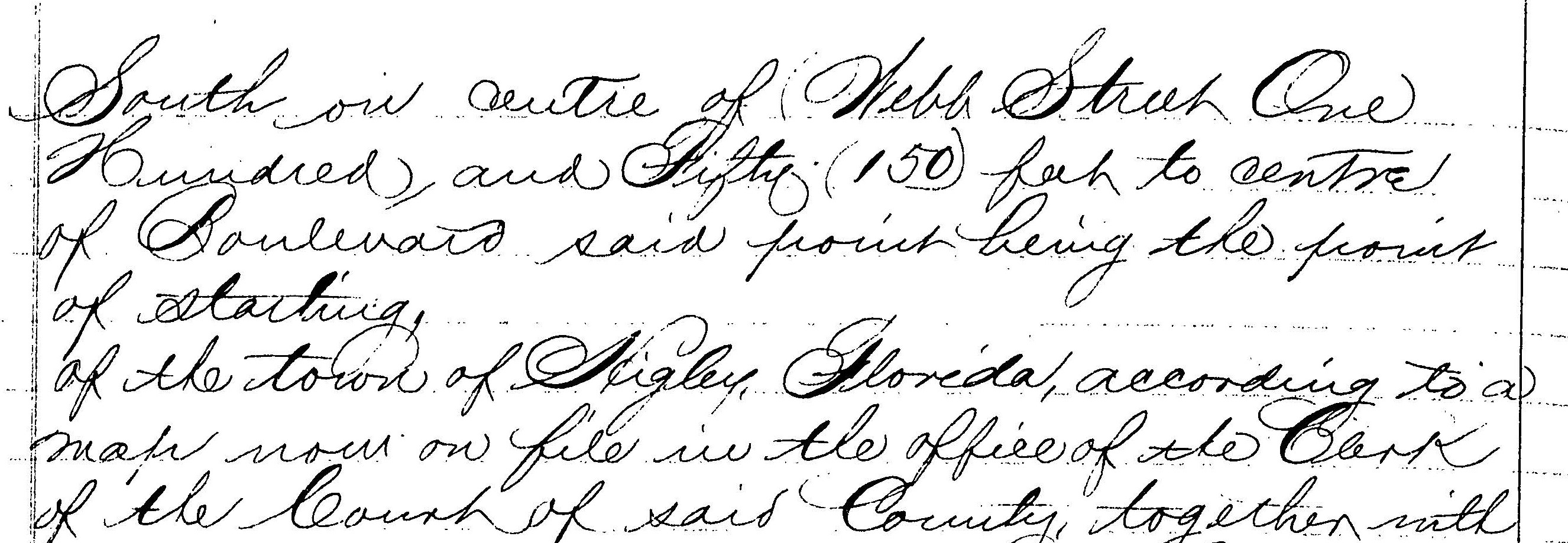
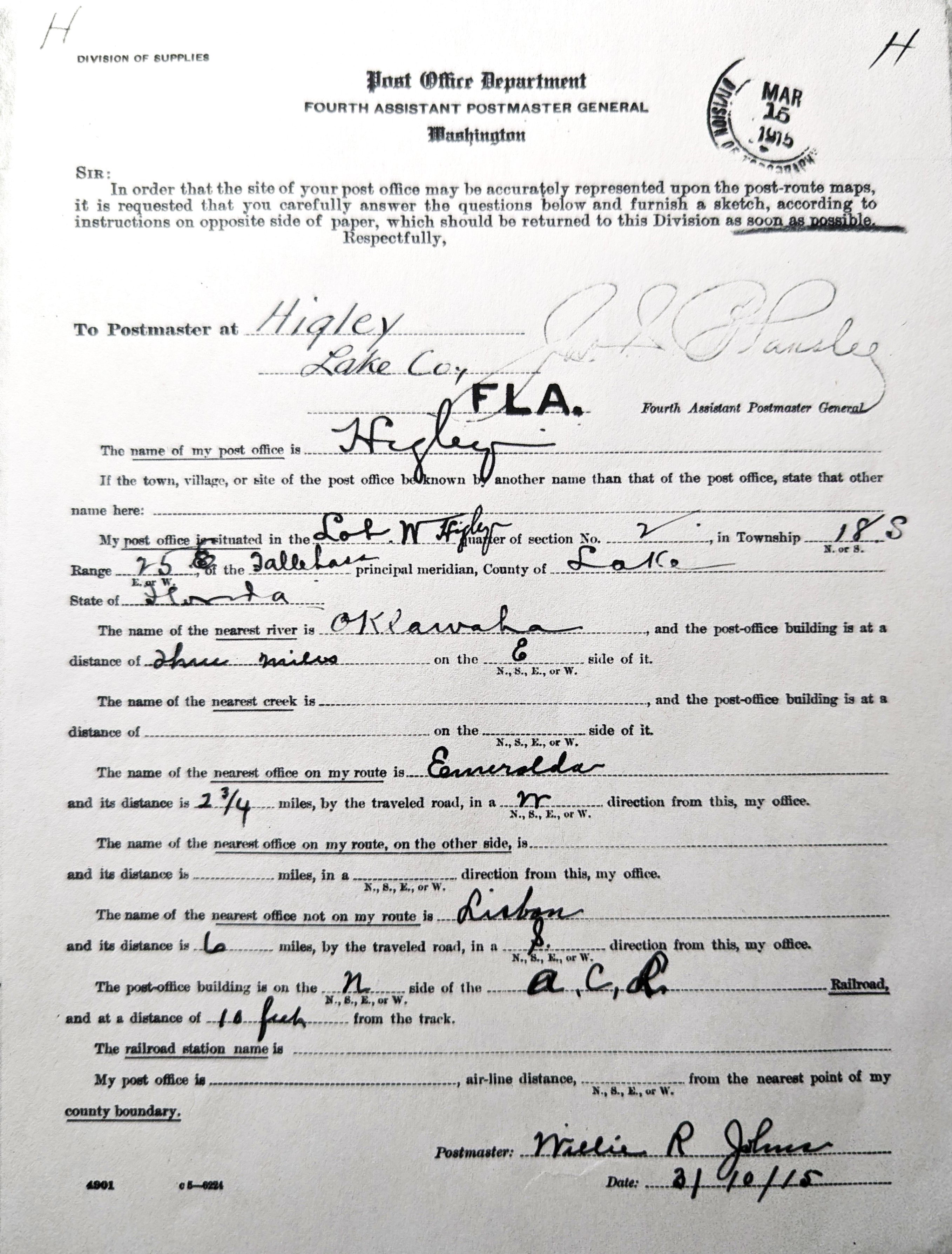
Through deeds and Commissioners records I was able to create a layout of the town and have found the heart was the intersection of Webb Street and Boulevard1. But where exactly was that since both streets no longer exist? If we look at the fourth document dated 10 March 1915 it starts, “SIR, in order that the site of your post office may be accurately represented, it is requested that you carefully answer the questions below…” Postmaster Willie Johns stated that it was in “Lot W” and a little more research revealed that Lot W is in block 302. It just so happens that the west side of Lot W is abutted to what was supposed to be Webb Street and the north side abuts Em En El Grove Road. Why is this significant? I believe that Em En El Grove Road was Boulevard, thus placing the post office at the center of the town at or near the intersection of Webb Street and Boulevard3.

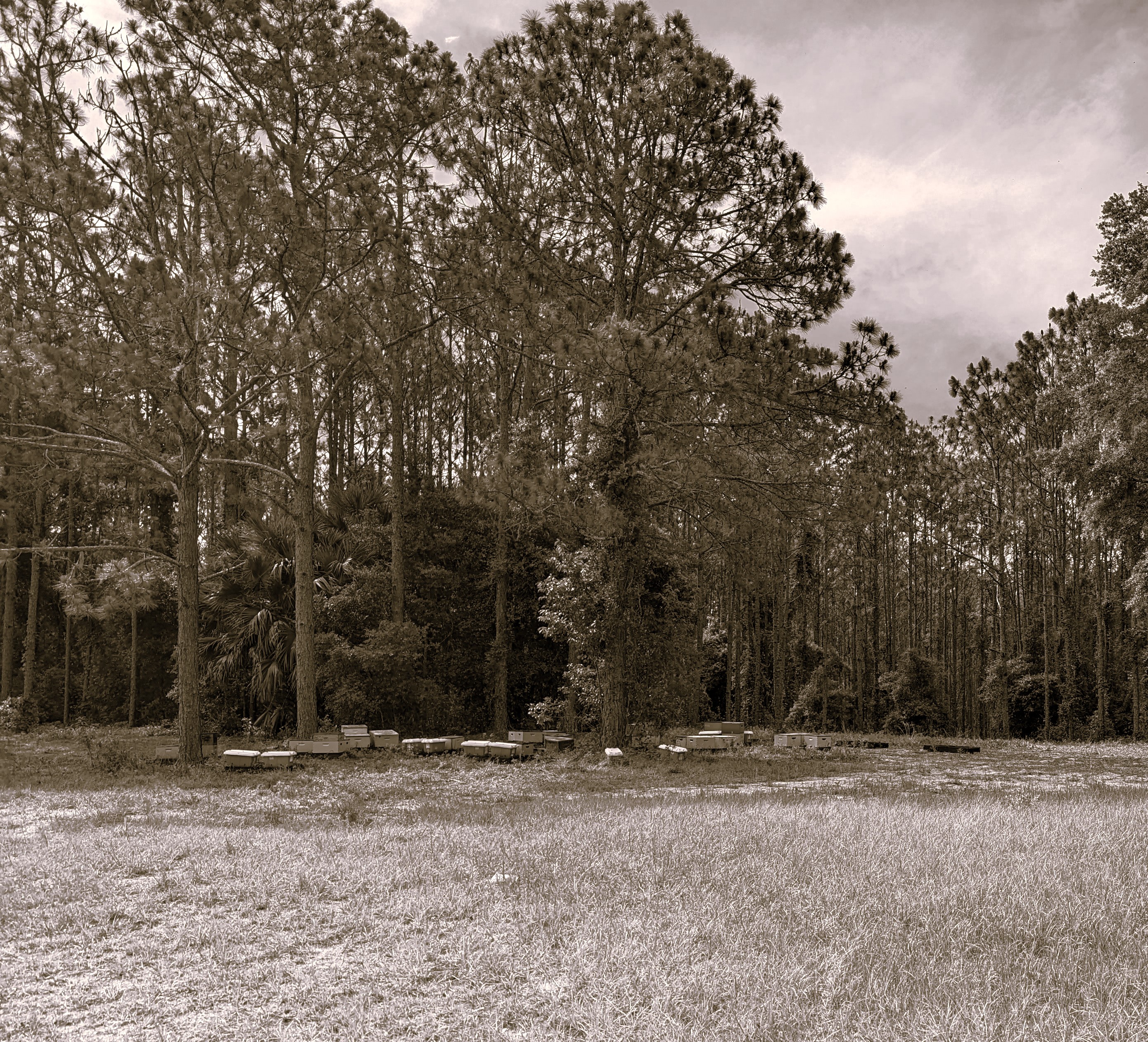
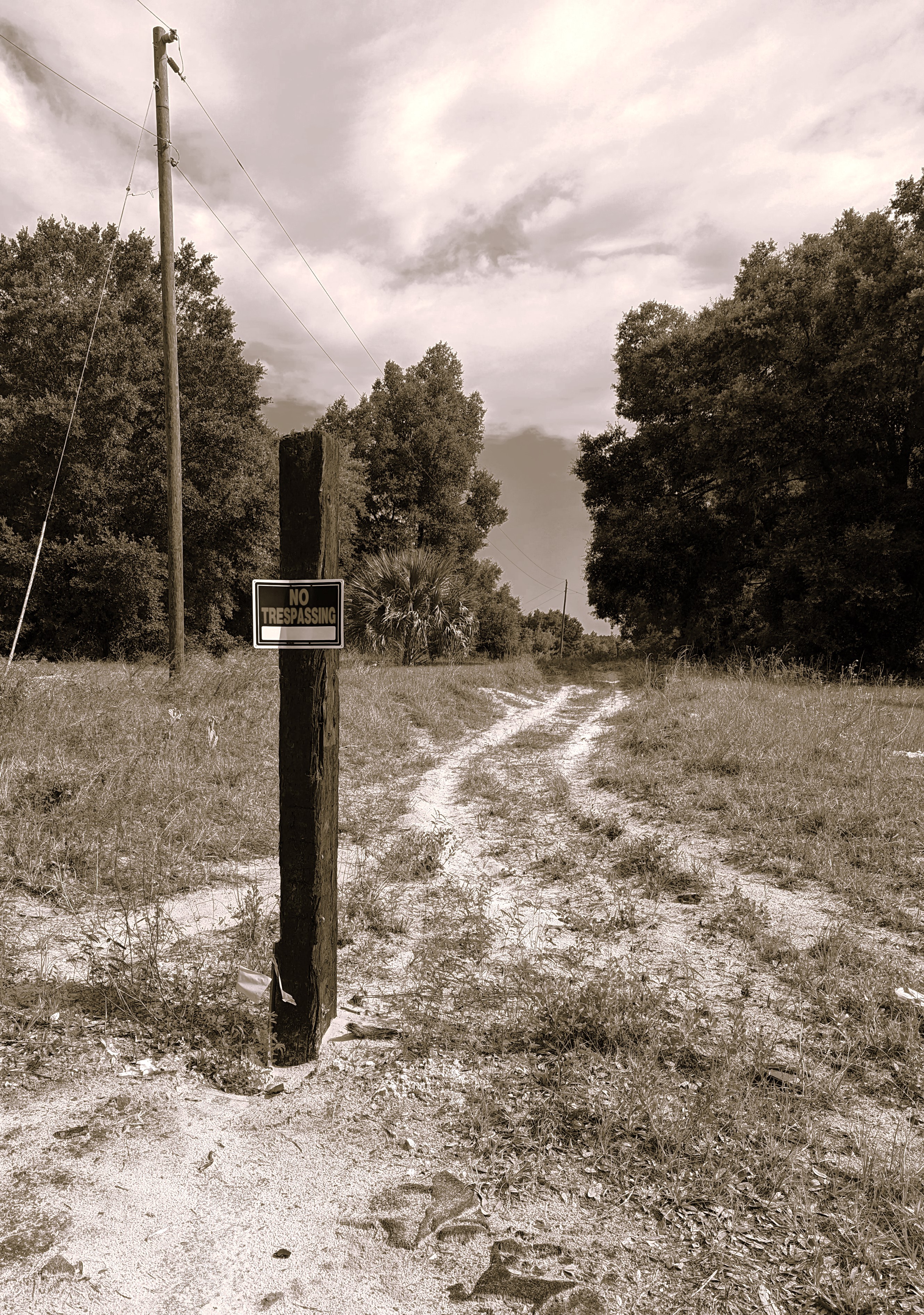
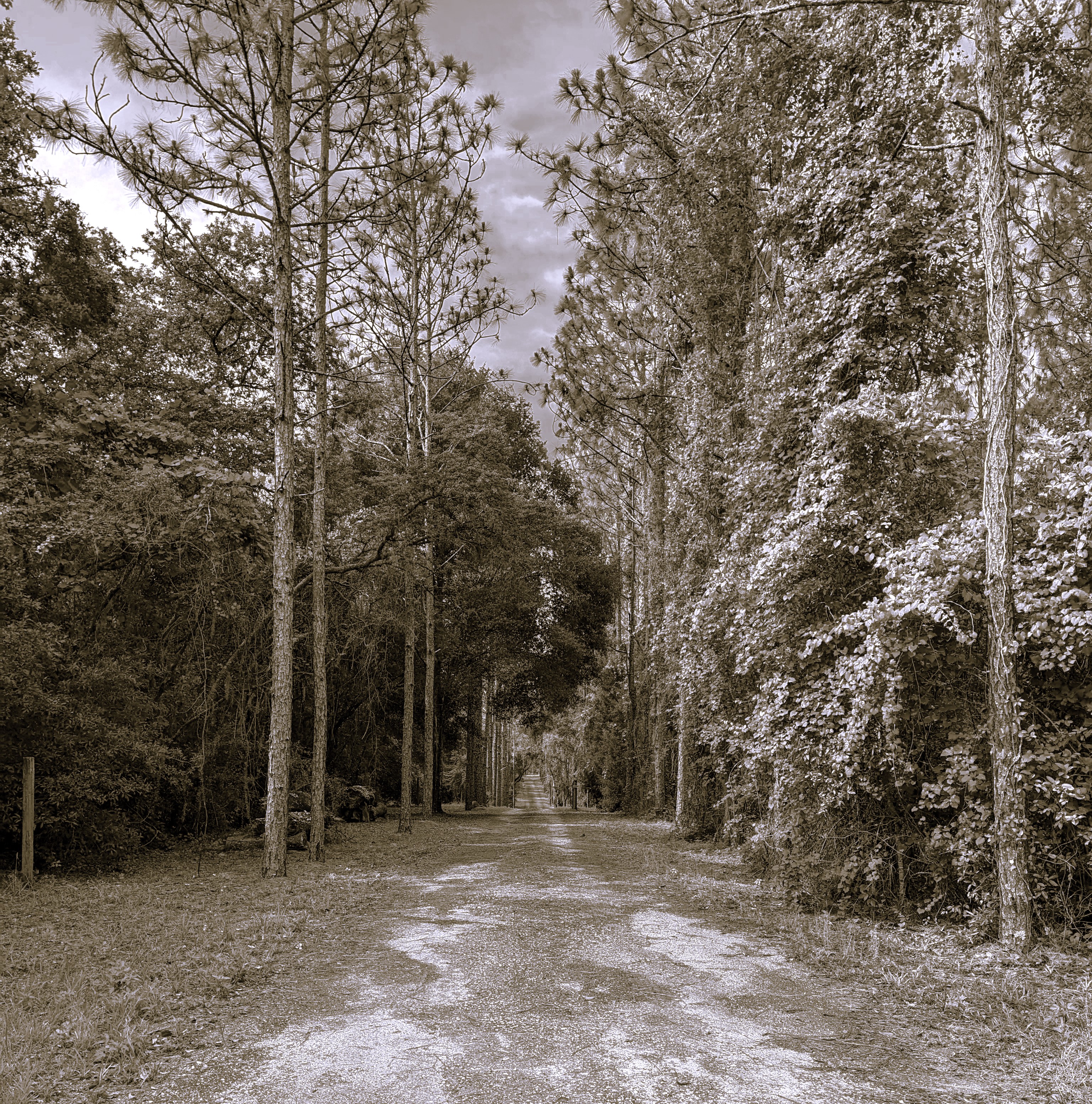

Center of the town of Higley
The town stretched into Marion County and further south to Lake Yale. My focus for this research project was to locate the center and downtown area.
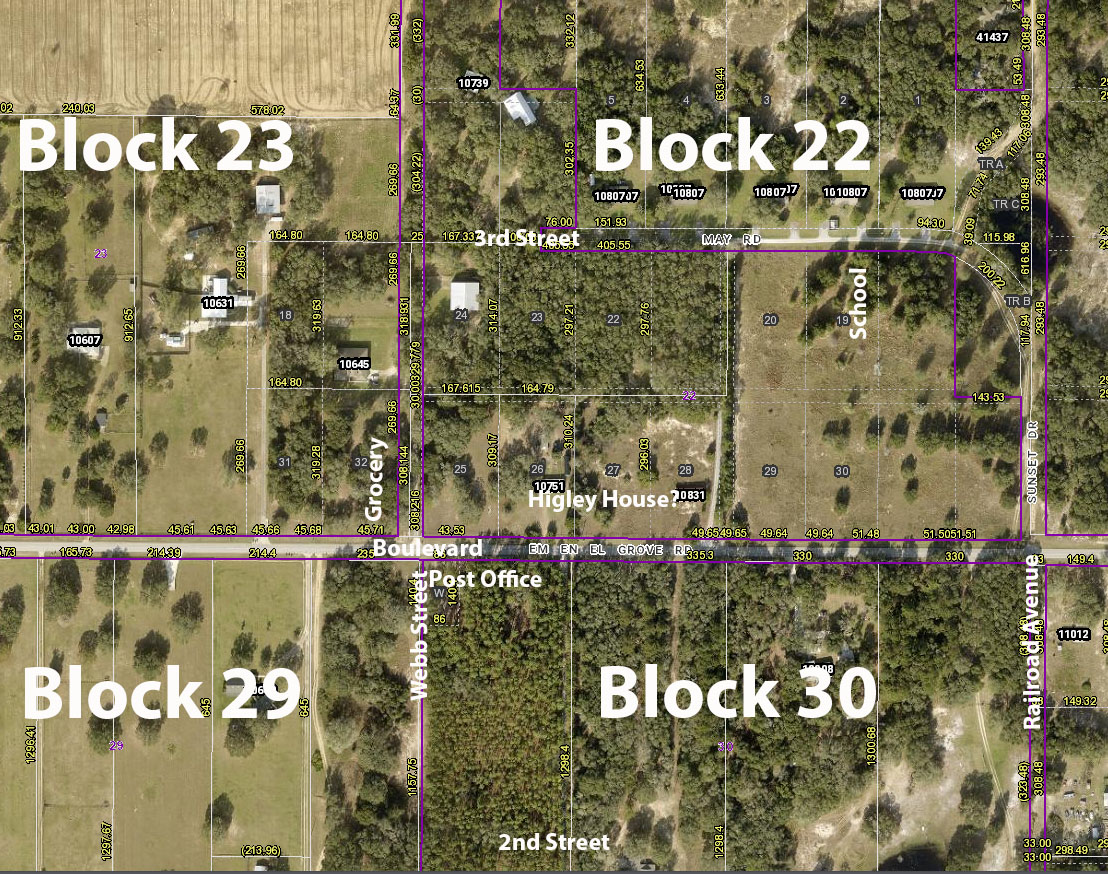
Downtown Higley
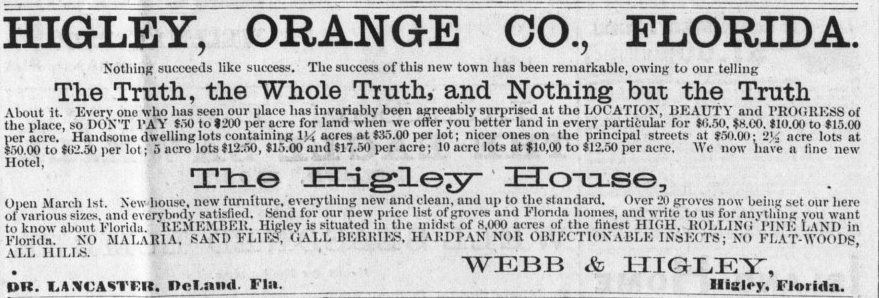
Webb and Higley
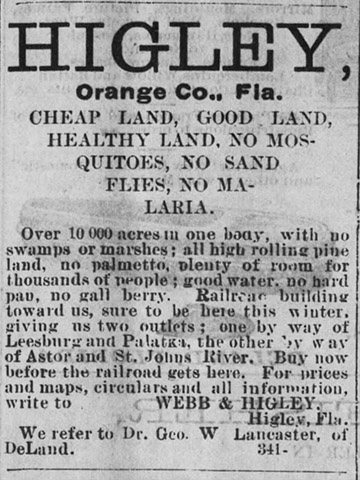
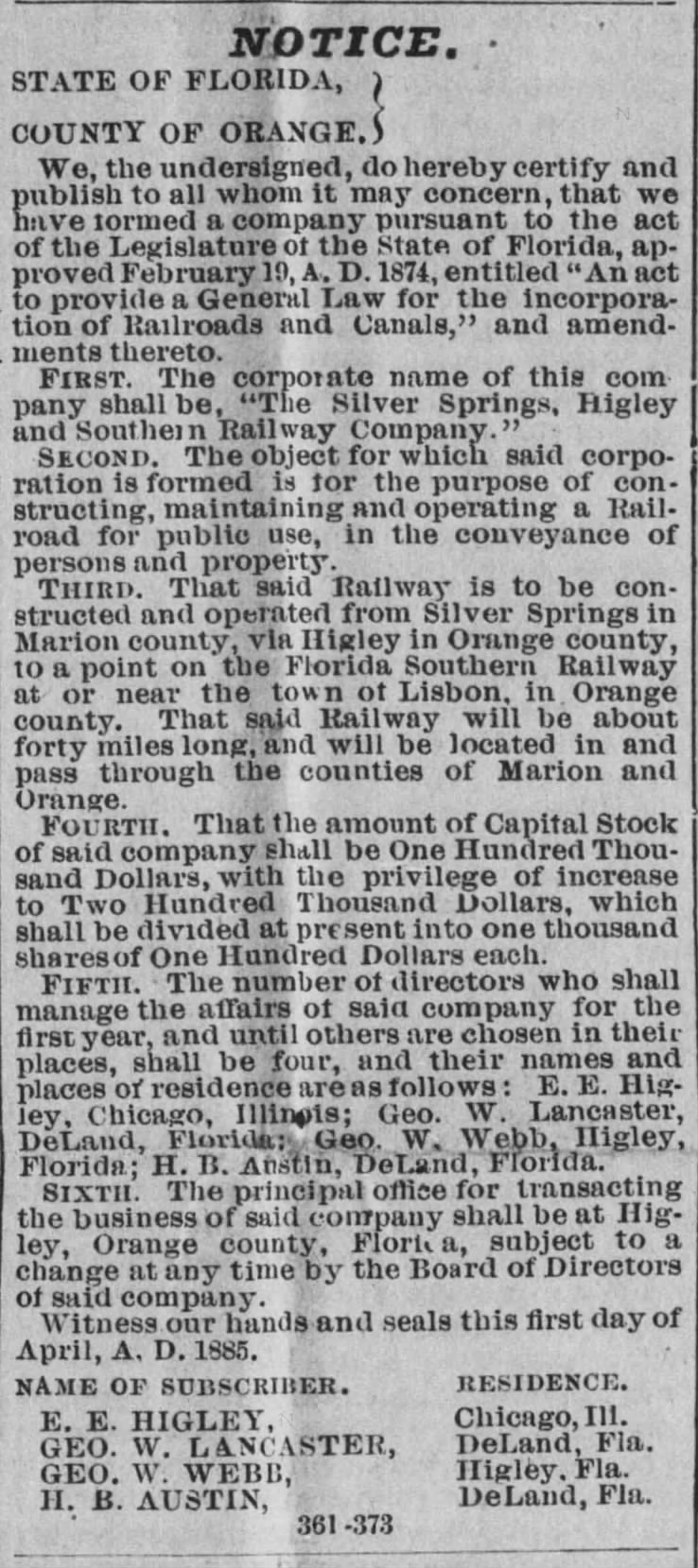
“Higley is situated in the midst of 8,000 acres of the finest HIGH ROLLING PINE LAND in Florida,” reads the advertisement on the left, “Over 20 groves being set here of various sizes, and everybody satisfied…” An article from the Florida Agriculturalist from 1884 says, “…Higley is but eighteen months old, and yet it is rapidly becoming a large town. They already have two first class sawmills, running, part of the time day and night, to supply the demand for building material, orange boxes and vegetable crates. A hotel of thirty-five rooms is rapidly being pushed and soon will be ready for guests, which will be numerous as soon as the steamboat is put on Lake Yale. A post office is already established…A neat schoolhouse is one its good features and is at present used also for church services. Messers. Page and Johnston have started a good general store to supply the already large demand. Wide avenues have been cut through the pines, and as the town has been systematically laid off, it presents a very pleasing sight. Messers. Webb and Higley, who are the founders of the place, are both men of stern integrity, and are working hard to build up the town.” By all accounts, Edward and George’s vision of a town was beginning to come into fruition; in April of 1885 a “new railroad was incorporated under the name of the Silver Springs, Higley and Southern…”4.
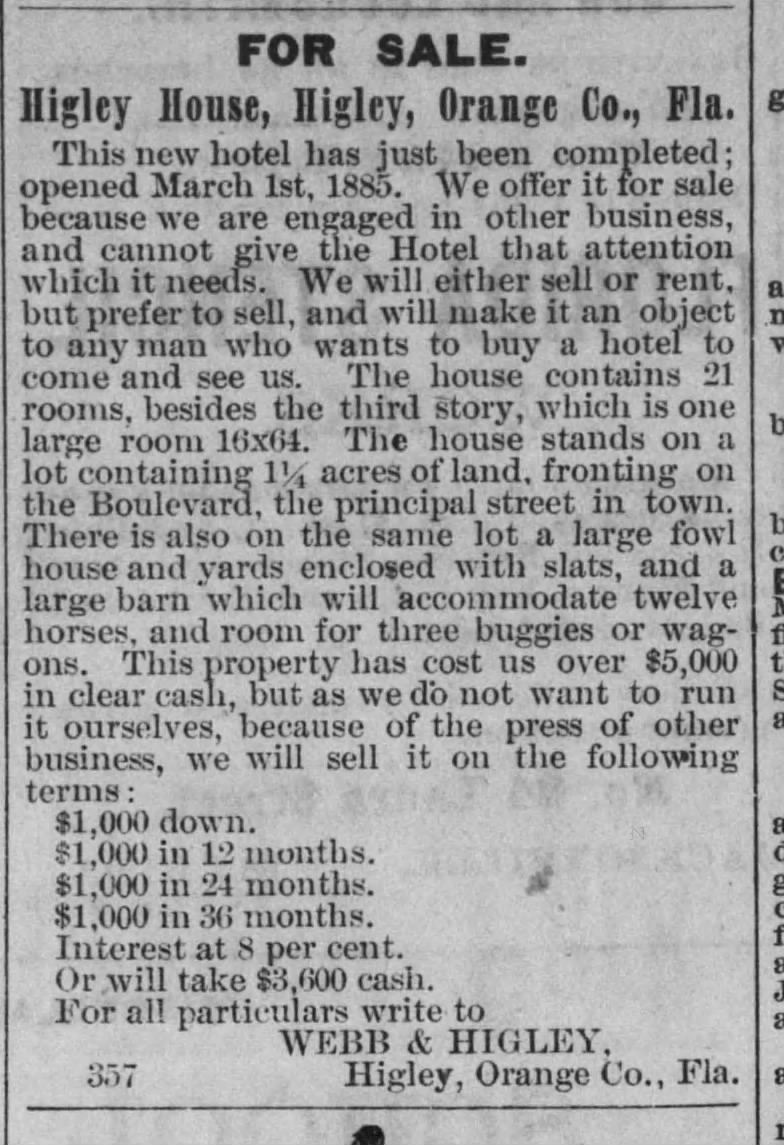
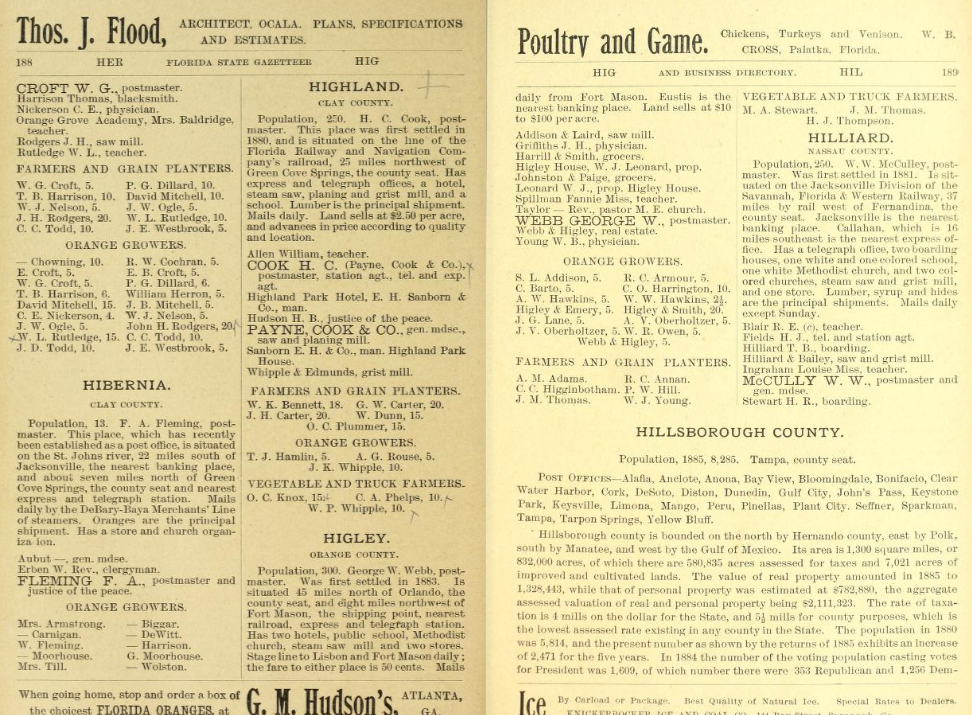
Located in Block 22 was the school, Lot 19 to be exact, where in 1887 Miss Fanny Spillman was the teacher. The town at this time had 300 residents, two physicians, a church, two hotels and two grocers including Johnston and Page5 who owned Lot 32 on Block 236 which would be on the corner of Webb Street and Boulevard, diagonal to the post office. Edward and George formed the business partnership of Webb and Higley which, by 1886, developed into the Higley Improvement Company7. The company bought Lots 25 through 32 in Block 22 in what was going to be the downtown area, making them prime real estate as those lots all face Em En El Grove Road (which further points to it being formerly called Boulevard). I also suspect that on one of those lots, specifically lots 26, 27 or 28 sat The Higley House, a 21 room, three story hotel. Opening on March 1st, 1885, just 24 days later, Webb and Higley placed a for sale advertisement in The Florida Agriculturalist stating that they didn’t want to run it themselves “because of the press of other business.” It seems W. J. Leonard, listed as the proprietor of the hotel in 18878 may have leased the hotel because in 1890 there was a judgment from the Fifth Circuit Court which involved George, Edward and W. J. Leonard with lots 26, 27, and 28 being auctioned off to Augustine Barnum9 (the actual court document has yet to be located). Found in book 41, page 314 of the Clerk of the Circuit Court of Lake Co. is a deed dated 29 August 1904 where Augustine Barnum sold to David J. Caldwell, “All the frame buildings…situated on Lots Twenty-six (26), Twenty-seven (27), and Twenty-eight (28) of Block Twenty-two (22) in the Town of Higley…said buildings to be removed from premises…before January 1, A.D. 1905…” I suspect one of these “frame buildings” may have been the Higley House.
Unfortunately, the blossoming of the town would wilt with the freezes of 1894 and 1895 which severely injured the citrus industry in this area, at least for the time being, and the proposed rail line never materialized. On 10 April 1895 Edward died at the age of 41, his widow, Georgia, moved back to Chicago where she ran a boarding house; she and Edward never had children (contrary to the story of the origin of the name of Em En El). She married a second time to physician Alexander C. Smith on 31 March 1902 in Chicago. George and his wife Julia moved to Buchanan Co., Missouri where she died in 1913, they too never had children. George married a second time to Lorena J. Earll the same year and died in 1938. While the freezes may have sounded the passing bell it was by no means the death knell, the town would continue to exist, and two new industries would settle in – turpentine and lumber.

Turpentine and Lumber
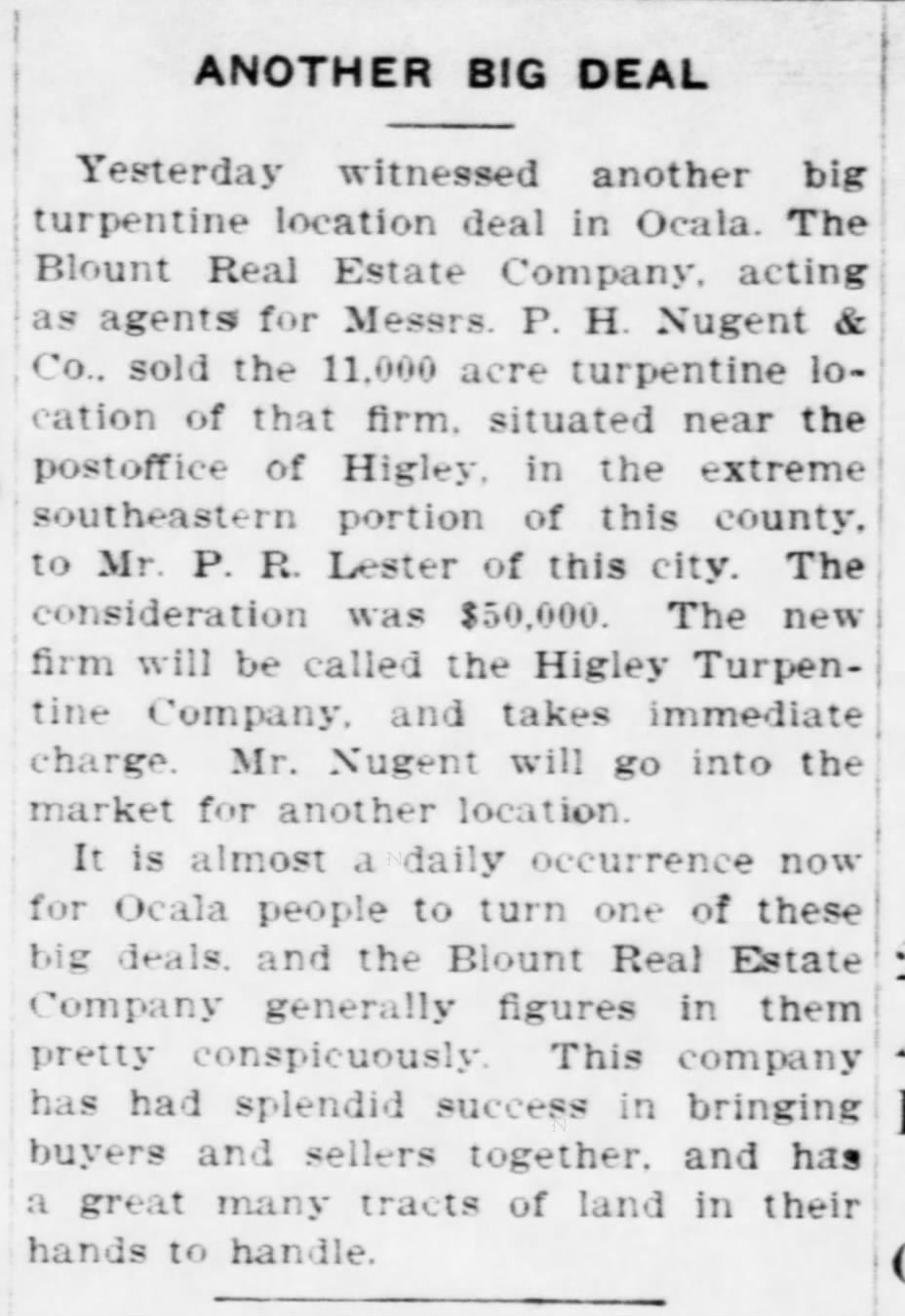
When I started this research project, I didn’t expect to find much except that so and so bought the land from so and so and so forth. When I came across a deed from 1913 of the lot that I live on, there was a clause at the bottom of the document, “except a timber deed which was made to the Higley Turpentine Co, running eight years from July 1911.10” The land had been sold by Carlie A. and Ella Vaughn and I found that they had purchased the land from the Peninsular Naval Stores Company. I was confused by this assemblage of words. I understood what they meant individually – Peninsular. Naval. Stores. Company – but collectively? A Google search revealed that naval stores were the products derived from pine sap like turpentine and resin. Naturally I began to explore the turpentine industry in Florida and uncovered a dark chapter in the state’s history that stained the land I live on.
With its vast pine forests, the southeastern United States became a major production center for turpentine. Large companies bought up timberland or the right to use it and brought in large teams of workers to scrape the faces of the pine trees and channel the sap into cups for collection. The process was labor-intensive, but the companies often paid very little. Most turpentine workers were African Americans or convicts leased through the state or county jails. Whether you were free or a convict, the exploitation was the same; poor living conditions, disease, abuse and general lack of care plagued the turpentine camps. At the height of the Florida turpentine boom (1907 – 1909), 90% of the prison population was leased to private companies.11 For those who were “free”, you were paid in company scrip which could only be used at the company’s commissary, and such was the set-up with Peninsular Naval Stores Company (PNSC). When the Vaughn’s purchased large swaths of land from the PNSC, they also purchased, “…six mules, 2 horses, three two horse wagons…one turpentine still…one coopers shop…one commissary building and stock of goods…”12. The deed is 12 pages of land, leases and goods and it seems the Vaughns adopted the standard mode to their enterprise in the use of the commissary. In the 1900 federal census for Higley, of the 47 naval stores laborers, two where white – the foreman and the manufacturer. Also recorded as laborers were 16-year-old Lewis Foreman and his 14-year-old brother Ruben as well as 14-year-old Henry McKisel. In the 1910 federal census of Higley, we find Edward C. Poe as “owner turpentine farm” and on the following line is Carlie A. Vaughn listed as “woods rider”, another name for the foreman since they rode horseback overseeing the worked. In this census we see 33 laborers including 16-year-old Augustus Lastus, 13-year-old Isaac Tyson and his 11-year-old brother Elbert. It seems to have been a family affair because Isaac and Elbert’s father, Adam, was also a laborer for this turpentine farm; their mother Eva is also listed though not as a laborer. Women were an integral part of the system with cooking and cleaning being their main duties and we find Annie Tanner and her 15-year-old daughter Carrie listed as laundresses as well as Minnie Waits, her sister Lattie and Mary Butler. These were ghosts I didn’t know about, the ones that labored where I’m sitting writing this.
A resident of Higley penned the following in a letter to the editor in 1909, “Oranges and grapefruits are moving off quite lively. The crop is abundant and ripening very fast…I think there will be shipped from this place ten to fifteen thousand boxes of oranges and grapefruits…Mr. Caldwell’s mercantile interests here…is prospering…Mr. Ed Poe is pushing his turpentine interests and is prospering…Last Tuesday night there was a social at Mr. Vaughns, attended by twenty or thirty young people…There are a lot of young men here, picking and packing oranges. Several of these attended and added to the pleasure of the occasion…Mr. and Mrs. Vaughn are splendid entertainers and made everything enjoyable for their guests. Long may they live to make the young people happy.”13 I can’t speak to Carlie Vaughn specifically but the extant documentation on the turpentine foreman is not positive as they were the driving force in production that started from sunup to sundown.


The letter also reads almost like an ad, an attempt to entice the young people to come and stay in this very rural area. In 1917, however, the United States entered World War I and in the Florida State Archives one can find a plethora of draft cards of the “young men” of Higley. Many factors played a role in the ghosting of this town, and the Great War seems to be one of them. There’s a song that came out in 1919 called How you Gonna Keep ’em Down on the Farm (After They’ve Seen Paree?) and I think that sentiment rang true here. The last federal census for the town was in 1920 and on 15 March of the same year the post office closed; citrus trees became the new residents. Long time Higley resident John F. Irvin was one of the many growers here and bought large chunks of the town he lived in, including the lot I live on. The town began to fade into the background, becoming simply known as Higley Subdivision in official records and colloquially as “Higley’s Place,” a name that was given to the area in the 1912 deed when the Vaughns bought the vast amount of land and goods from the PNSC, “…the turpentine still and farm situated in Lake County, Florida; and known as the ‘Higley Turpentine Place.” Starting in the early 1970’s the dream began to be dismantled yet again with hearing after hearing of the Board of County Commissioners closing streets that no longer (or ever) existed, to do away with unnecessary easements.
Before starting the deep dive into the records, when I’d turn off State Road 452 onto Em En El Grove Road and saw the rolling hills before me, I’d let the ghosts guide me. I immediately imagined coming into town when I reached the crest of the hill with the Higley House on the left and I knew by instinct (or guidance) that’s where it should be. While no proof shows definitively where it was, the records provide substantial evidence the possibility of where I suspected it could be. The records also exposed the narratives of the many phases and lives that existed here and it’s hard to believe that this road, Em En El Grove, formerly Boulevard, has 141 years of history that we can barely see. Take the time to walk and look then you’ll begin to see the traces hidden in driveways, empty lots and the deeds of the land on which you live.
Researched and written by Shane Majors copyright 2024 Contact: ShaneMichaelPhoto@hotmail.com
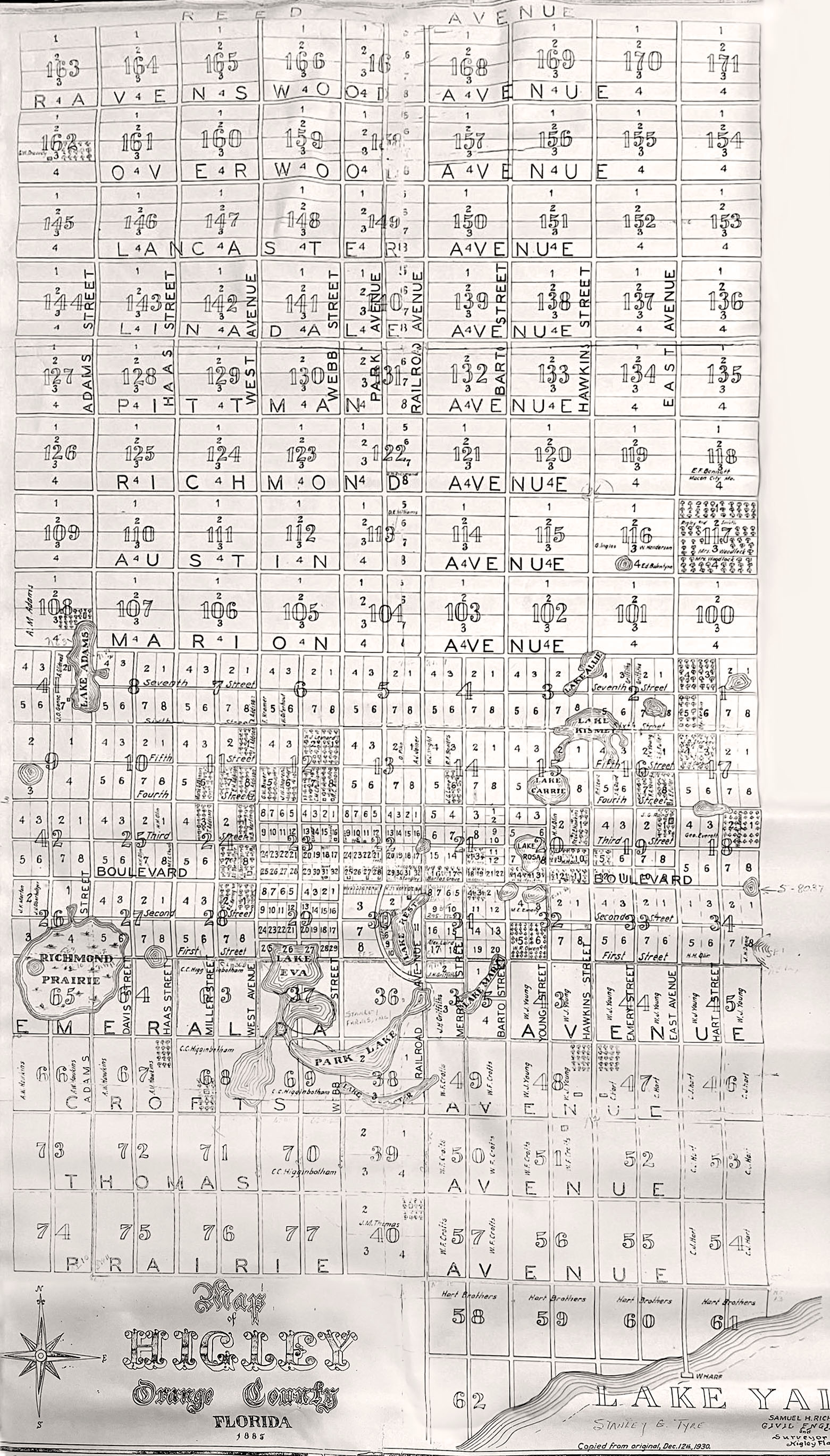
Post Update: It’s All in a Name
After posting this, a reader contacted me to let me know that they had a map of Higley. When they sent the photos, I was beyond excited to see the town as it was laid out and that Em En El Grove Road was, in fact, formerly called Boulevard. Furthermore, certain names stuck out like Ravenswood Avenue, Haas Street, Lake Kismet, Lake Carrie, Barto Street, and Hawkins Street. In 1883 Edward along with John S. Banks purchased 629 acres from the Board of Education of Florida to form part of the town of Ravenswood15. Also in 1883, Edward and Solomon Haas purchased 2,029 acres from the Board of Education of Florida to be sold to the Kismet Land Improvement Co.16 which was responsible for the founding of the town of Kismet (Solomon Haas was the superintendent). Carrie Barto and Wesley Hawkins (who was the first owner of the land I live on) were pioneers of Higley as they both had land patents issued in 1883 (the same years as Edward, Hannah, and Maria) and their land made up large portions of the town; Carrie sold five acres of her land to the Methodist Episcopal Church (Lot 2 Block15)17. Merit Street and Barto Street still exist, though only in fraction and Emeralda Avenue has been reduced to Emerald Avenue with only a small portion still in use. This has truly been a wild experience in discovering the area I live – so much has been rediscovered, revived, and remembered.

The Department of the Post Office, National Archives.

1. Book 44, page 521 Orange County Comptroller
2. Book 139, page 484 Clerck of the Circuit Court of Lake Co.
3. Book 44, page 521 Orange County Comptroller
4. South Florida Argus, 7 May 1885. University of Florida Digital Collections
5. Richards, John R. The Florida State Gazetteer, 188-89. New York: The South Publishing Co. 1886.
6. Book 4, page 390 Clerk of the Circuit Court of Lake Co.
7. Book 44, page 521 Orange County Comptroller
8. Richards, John R. The Florida State Gazetteer, 188-89. New York: The South Publishing Co. 1886.
9. Book 11, page 357 Clerk of the Circuit Court of Lake Co.
10. Book 62, page 179 Clerk of the Circuit Court of Lake Co.
11. Drobney, Jeffrey A. “Where Palm and Pine Are Blowing: Convict Labor in the North Florida Turpentine Industry, 1877-1923.” The Florida Historical Quarterly 72, no. 4 (1994): 411–34. http://www.jstor.org/stable/30150422.
12. Book 54, pages 510-522 Clerck of the Circuit Court of Lake Co.
13. The Ocala Banner 12 November 1909. University of Florida Digital Collection.
14. Book 54, page 518 Clerck of the Circuit Court of Lake Co.
15. Book FF, page 468 Orange County Comptroller
16. Book 2, page 142 Orange County Comptroller
17. Book 44, page 175 Orange County Comptroller
 Paper Cut-Outs of Matisse